Few films in history carry no copyright yet change the course of public awareness. Without Baťa’s resources, personnel, and approval, this landmark warning against Nazi aggression would never have seen the light of day.
The author of the text bears full responsibility for the information provided on this page. European Justice Organization z.s. only provides a publishing account for independent journalists and is not responsible for the content or the sources cited.
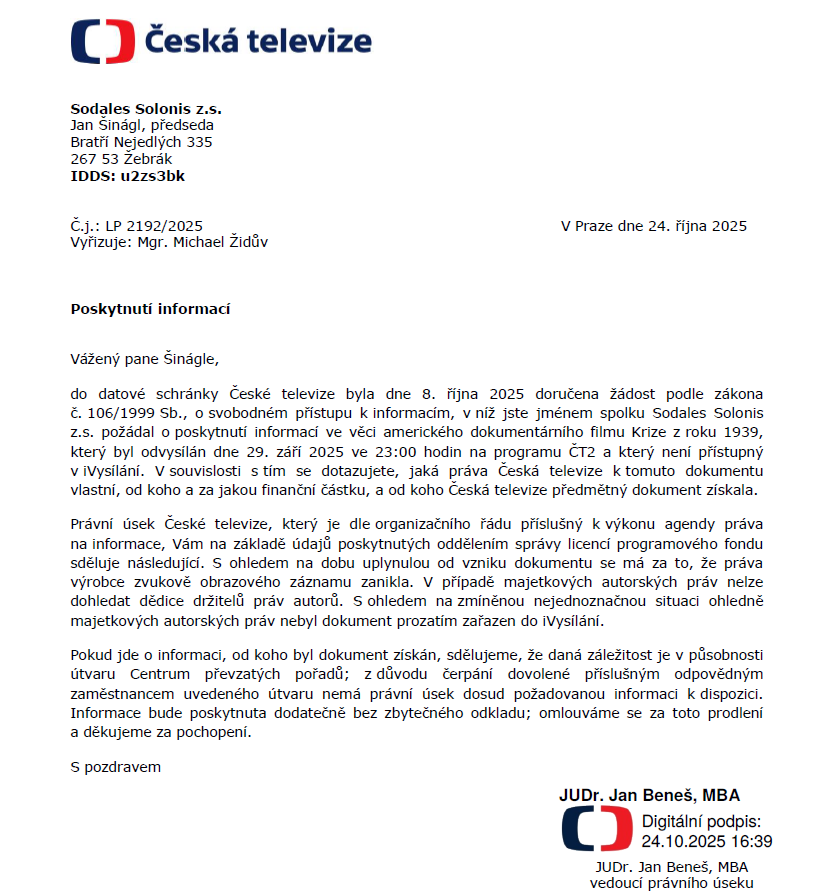
Updated October 27, 2025: Response from Czech Television regarding copyright – see attachment. JŠ
***
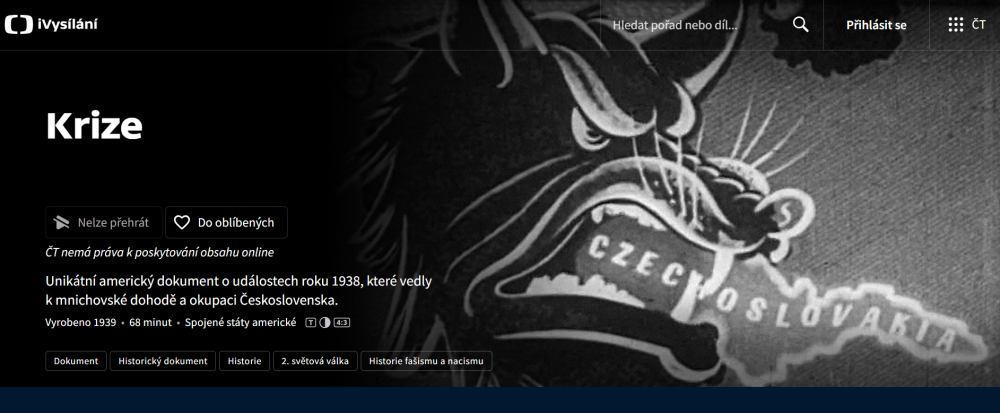
In 1939, as Czechoslovakia faced imminent occupation, a clandestine documentary emerged that shook American audiences awake: Crisis: A Film of the Nazi Way. Ranked among the top ten films of the year by U.S. critics, Crisis was not a Hollywood product. It was an act of resistance forged in the modernist hills of Zlín, within Jan Antonín Baťa’s visionary film studios. Without Baťa’s resources, personnel, and approval, this landmark warning against Nazi aggression would never have seen the light of day.
Founded in 1934–35, the Filmový Ateliér Baťa (FAB) in Kudlov near Zlín was one of Europe’s most advanced cinematic production centers. Originally created to support Baťa’s global industrial network, the studios attracted avant-garde filmmakers such as Alexandr Hackenschmied (later Alexander Hammid), Elmar Klos, and František Pilát. By the late 1930s, FAB had evolved into a technically sophisticated and artistically daring institution capable of producing montage sequences, animated political graphics, and complex post-production work—skills that would prove indispensable to Crisis.
When American producer Herbert Kline and journalist Hans Burger began developing their anti-fascist documentary in 1938, they turned to this Baťa nexus for help. Testimonies from Czech filmmakers confirm that the Baťa studios’ staff worked in secret on the project. Hackenschmied, then a leading figure at Zlín, served as chief cinematographer and co-director, capturing both authentic and staged footage of Czechoslovakia’s unraveling—gas mask drills at Baťa’s Fatra plant, youth training at the Baťa School of Work, and the industrial landscape of Zlín itself. Editing was reportedly completed in secrecy at Baťa’s own facilities, using the studio’s cutting rooms and animation units to craft the film’s powerful narrative structure.
The project carried immense political risk.
The original negatives were smuggled out of the country under the innocuous title The Beauty of Czechoslovakia: A Cultural Film, flown to Paris, and then to New York, where the documentary premiered just days before the German occupation in March 1939. Turner Classic Movies later acknowledged the Baťa Shoe Film Department’s role in editing the film, while the U.S. Holocaust Memorial Museum confirmed that Crisis was never copyrighted—a rare anomaly for a documentary of such impact. Its unregistered status reflects the urgency, secrecy, and protective measures surrounding its creation.
Baťa’s support was not merely technical. Through executives like Hugo Vavrečka—who helped figures such as comedian Jan Werich escape Nazi persecution—the Baťa organization actedas a quiet but decisive ally of democratic forces. Its modern cinematic infrastructure became a tool of political resistance at a moment when few dared to speak openly.
Without Jan A. Baťa’s vision, facilities, personnel, and tacit approval, Crisis could not have been made.
It stands as a testament to how an industrial film studio, originally built to advertise shoes and modernity, transformed into a covert engine of anti-fascist cinema. Few films in history carry no copyright yet change the course of public awareness; Crisis is one of them. And behind it stood Jan A. Baťa.
This was not improvised; by 1938–39, the Baťa organization had established a structured rescue network that ultimately enabled thousands of people to escape during one of the most dangerous periods in modern history.
Support independent investigations and the sharing of truth
Each of your contributions not only helps fund our work, but also supports the spread of this information so it can reach as many people as possible. Together, we can ensure accountability and justice, so the truth does not remain hidden. Thank you for your support!