Jan’s faith proved right. Truth rose—slowly, stubbornly—until it broke the surface. His name, once buried under accusations, stands again for initiative, fairness, courage under pressure. He never came home. But in memory—and in the record—he has.
The author of the text bears full responsibility for the information provided on this page. European Justice Organization z.s. only provides a publishing account for independent journalists and is not responsible for the content or the sources cited.
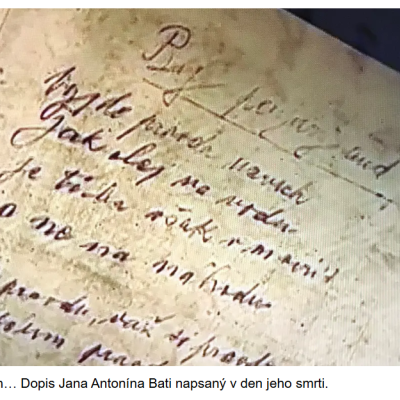
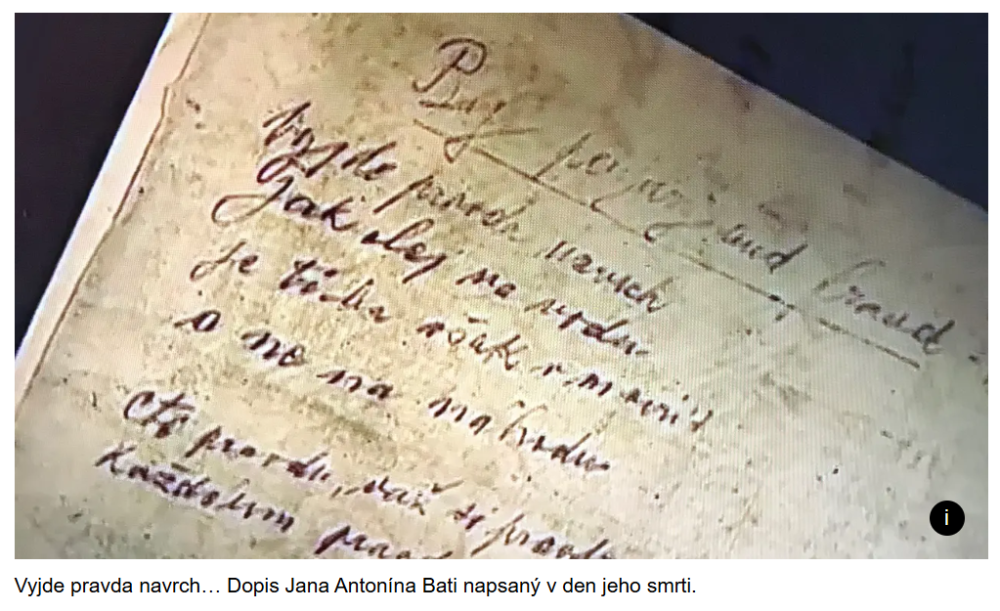
He wrote the following words to his family on a piece of plain paper: "The truth will rise to the top like oil on water, but you must believe in it, not in chance. Honor the truth, value the truth, wish the truth for everyone..."
***
Sixty years ago today, Jan Antonín Baťa, a patriot and the successor and builder of Tomáš Baťa's great work, left us. Brazil nominated him for the Nobel Prize. We condemned Jan A. Baťa, awarded him a state decoration, and to this day have not returned his family villa to him. The verdict was overturned, but no one wants to return the villa that was confiscated from Mrs. Baťa because she allegedly did not intervene against her husband's crimes. We are still not worthy of him.
Another year has passed and the descendants have made no progress regarding the villa or other important matters. They constantly make various excuses such as "we don't have the authority" etc. Above all, they take no steps to correct their mistakes. They only talk about things that are not important. Truth and justice are still hard to find in the Czech Republic and Slovakia. All the people who have been benefiting from J. A. Baťa's work, achievements, and ideas for more than 80 years have become rich on the lies and deceit of their ancestors. It is sad, but true. JŠ
***
by John G. Nash
8/23/25
Prologue: Truth from a Hospital Bed
On August 23, 1965, in a São Paulo hospital, Jan Antonín Bata wrote a final line to the world: “Truth rises to the top like oil on water… Honor the truth, cherish the truth, wish truth upon everyone.” At noon his heart failed. He died a condemned exile—branded a collaborator by his homeland, shunned by wartime allies, erased from official narratives East and West. And yet he died convinced the record would be set right. Decades later, courts did clear his name: far from aiding Nazism, Jan had aided resistance and the Allied cause. Why, then, could a man of such stature never return home?
“Two Men”: The Baťa Principle
Jan lived by a principle he absorbed from his half-brother Tomáš: separate enterprise from politics. When Zlín begged Jan to be mayor in 1932 after Tomáš’s death, he refused and backed Dominik Cipera, believing he could serve the nation better by building industry, towns, schools, and jobs. The brothers’ 1931–32 succession plan—Tomáš preparing to step into public life while Jan took sole responsibility for the firm—made that division practical. For the rest of his life, Jan would practice a kind of patriotic industrialism: nation-building through work.
Before the Deluge: Beneš and Baťa
By the late 1930s, two Czech models of leadership stood in tension. President Edvard Beneš leaned on diplomacy and foreign guarantees; Jan Baťa prepared materially for the worst. Beneš’s resolve faltered whenever London and Paris wavered. Jan, by contrast, stockpiled strategic materials, duplicated plants abroad, moved skilled families to safety, and proposed industrial mobilization plans to the army.
The occupiers knew who he was. German and Protectorate records tagged Jan as hostile to National Socialism—an antithesis to Nazi ideology. There were no surrender speeches, no collaborationist statements, and he opposed the dismemberment of Czechoslovakia. The regime shuttered roughly 500 Baťa retail outlets in punishment. Testimony from employees would later show clandestine support for the Czech resistance, supplies for the Slovak National Uprising (1944), and the relocation of hundreds of Jewish families under Baťa employment covers. In deeds, not declarations, Jan behaved as a patriot.
Part I — The West’s Fear of Exposure
When the war ended, one might have expected Allied thanks. Instead, a layered Western framework had already been built to contain Jan and capture his enterprise. In Britain, senior political patrons inserted themselves into the firm’s local operations before and during the war, asserting provisional control over key hubs and empire holdings. In Canada, wartime custodial rules enabled “automatic vesting” of (a Czechoslovak businessman because he was a citizen of an occupied country) shares—treating an avowed anti-Nazi as an “enemy” on paper and excluding him without due process of law. In North America, an Allied intelligence office drove blacklists and propaganda that labeled him “suspect,” even while quietly leveraging the company’s global network for Allied purposes. By 1941–42, U.S. economic-warfare officials formalized the stigma through blacklisting coordinated with that intelligence apparatus. After the war, those responsible for the damage to Jan A. Bata would not open their wartime ledgers to correct their custodial decisions. If the displaced owner were able to return, armed with resources, records, and resolve, it posed a grave risk to them.
Part II — The East’s Fear of Return
In Prague, after the war, the motive was different but the conclusion the same: Jan Bata must not come back.
For Beneš and the National Front, Jan was a rival who could reveal how exile politics smeared a man who had actually acted on the ground. For the rising Communists, he was worse: the living refutation of their narrative. Jan’s welfare capitalism—homes, schools, clinics, profit-sharing—had won real worker loyalty. A returning Baťa could have become a third force: neither Communist nor a relic of pre-war party politics, but a popular industrial patriot able to attract Western capital and accelerate recovery outside Soviet control.
The solution was brutal and simple: in 1947 a Prague court tried Jan in absentia, convicted him as a collaborator, stripped his citizenship, and legalized confiscations under the Beneš Decrees. The verdict cemented the propaganda: “traitor,” case closed. It barred his physical return and toxified his reputation among those who didn’t know the record.
What Czechoslovakia Lost
Imagine Jan landing in Prague in late 1945 with proof of resistance, capital contacts in the Americas, and a blueprint for immediate jobs. Czechoslovakia might have rebuilt around an indigenous model of productive, socially minded capitalism, diluting Communist appeal, complicating Moscow’s grip, and giving non-Communist parties a charismatic economic anchor. The February 1948 coup was not inevitable. But with Jan condemned abroad and criminalized at home, that alternate path never had a chance.
The Long Vindication
Jan died in Brazil, where he founded new towns (Bataiporã still bears his name) and rebuilt industry out of jungle and red clay—proof that his method worked anywhere. For decades he was a cipher at home: to the West, a problem best forgotten; to the East, a myth convenient for propaganda. And then, slowly, truth surfaced. Courts revisited the record. Historians pried open archives. The official label of “collaborator” collapsed. The man who had closed shops in the Sudetenland, shunned Nazi blandishments, spirited families to safety, and supplied insurgents was posthumously cleared.
What His Story Teaches
Jan’s life is a study in how power fears independence. The capitalist West feared exposure of wartime expediencies; the Communist East feared competition from a working alternative. Both solved their problem the same way: keep him out, keep him silent. And yet the Baťa system’s deep appeal—dignity through useful work, social uplift through enterprise—outlasted both sets of gatekeepers.
In the end, Jan’s faith proved right. Truth rose—slowly, stubbornly—until it broke the surface. His name, once buried under accusations, stands again for initiative, fairness, and courage under pressure. He never came home in life. But in memory—and in the record—he has.
“Honor the truth, cherish the truth, wish truth upon everyone.” [Jan Antonin Bata]
“Loyalty to my people means more to me than my properties or my life.” Jan A. Baťa did not speak aloud, because he could not risk the lives of those who could not speak for themselves. That silence, misunderstood then, demands recognition now. ***
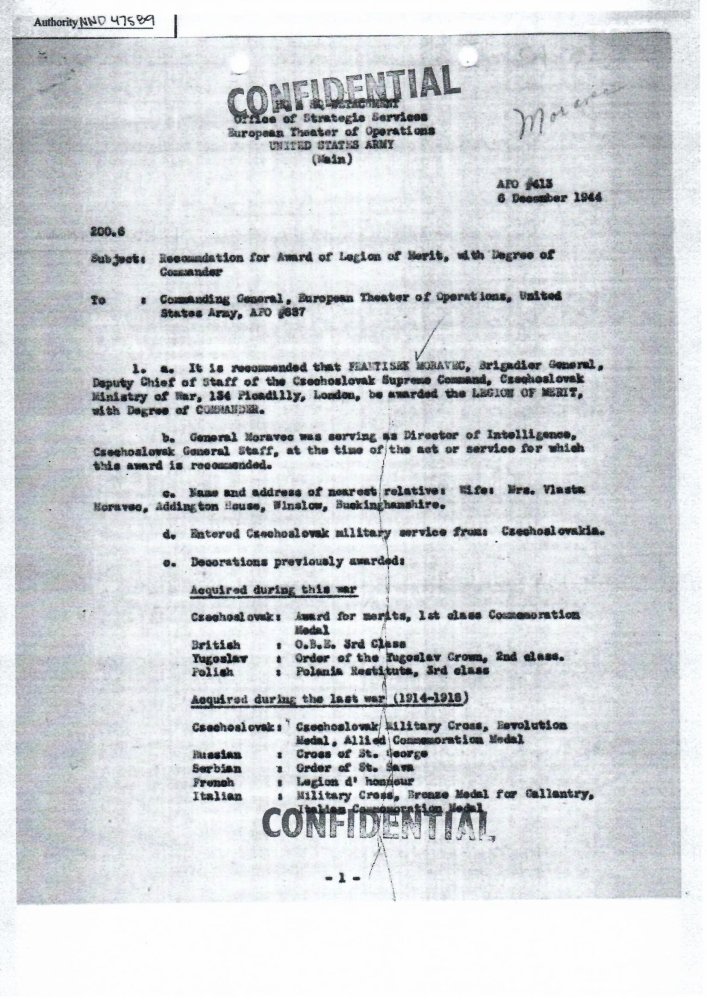
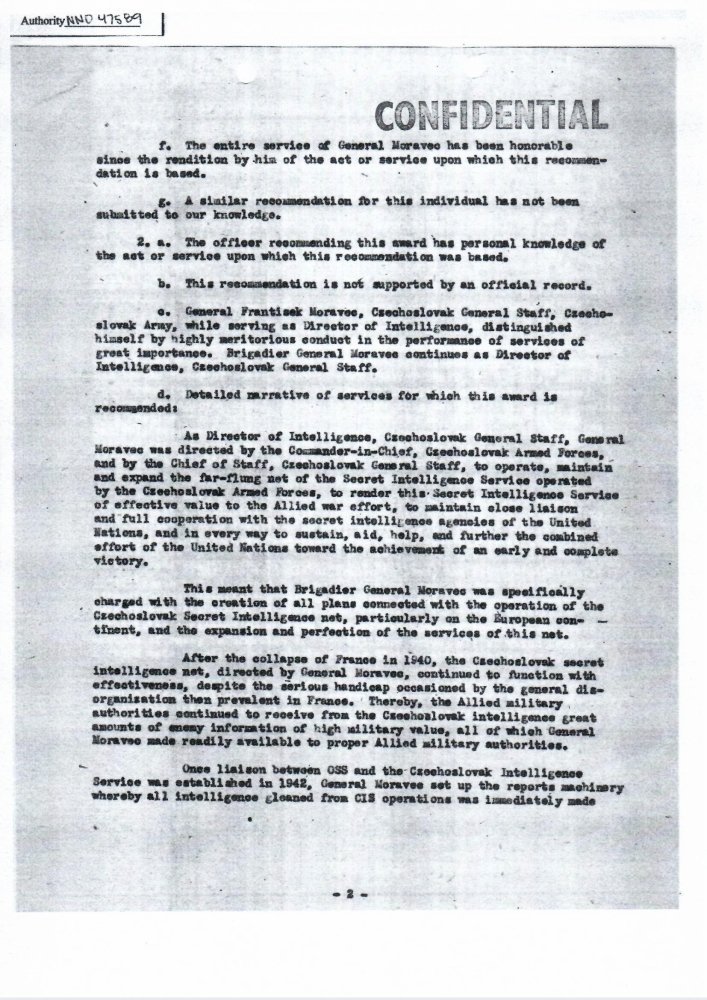
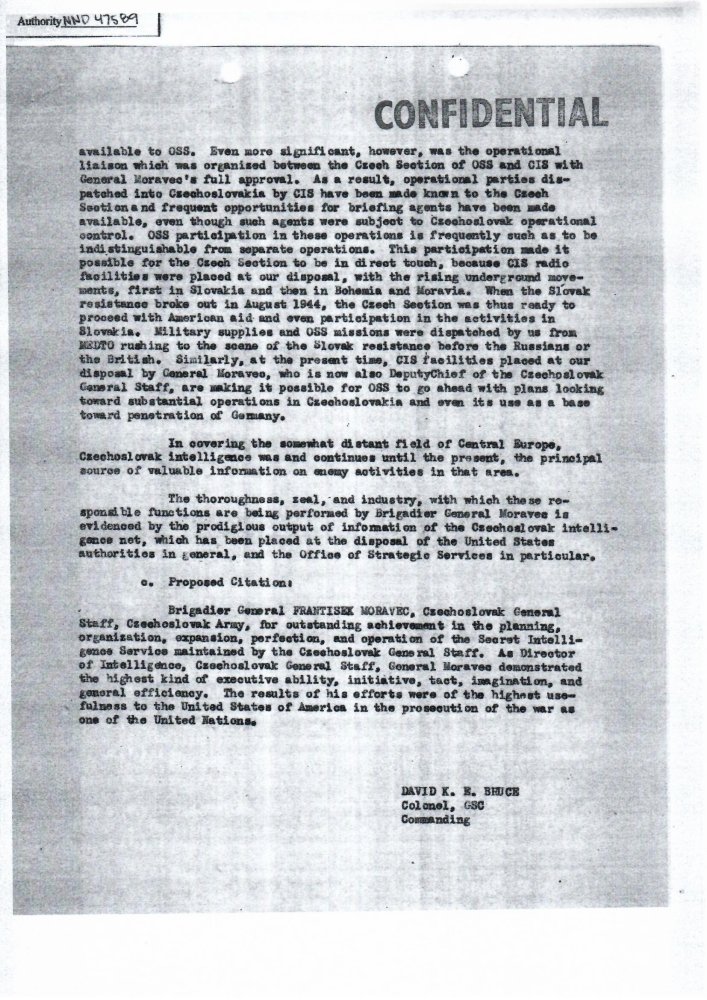
In the appendices, you will find an evaluation of the work of Colonel František Moravec by US Army Colonel David K. R. Bruce dated December 6, 1944. ***
Support independent investigations and the sharing of truth
Each of your contributions not only helps fund our work, but also supports the spread of this information so it can reach as many people as possible. Together, we can ensure accountability and justice, so the truth does not remain hidden. Thank you for your support!