Vaše hlášení o transparentnosti, svobodě tisku nebo korporátním a politickém vlivu pomáhá zajistit spravedlivý právní systém a rovnost pro všechny před zákonem.
Detail článku
HISTORICAL ARTICLE: The Nation Behind the Front - Jan Antonín Baťa and the Baťa System’s War for Czechoslovakia
Jan Baťa’s wartime record was not the record of one man acting alone. It was the record of a leader whose people, factories, finances, and worldwide organization continued fighting after Czechoslovakia itself had been occupied.
Za informace uvedené na této stránce nese plnou odpovědnost autor textu. European Justice Organization z.s. poskytuje pouze publikační účet pro nezávislé novináře a nenese odpovědnost za obsah ani za uvedené zdroje.
By John G. Nash Grandson of Jan Antonín Baťa | August 2026
Jan Baťa’s wartime record was not the record of one man acting alone. It was the record of a leader whose people, factories, finances, and worldwide organization continued fighting after Czechoslovakia itself had been occupied.
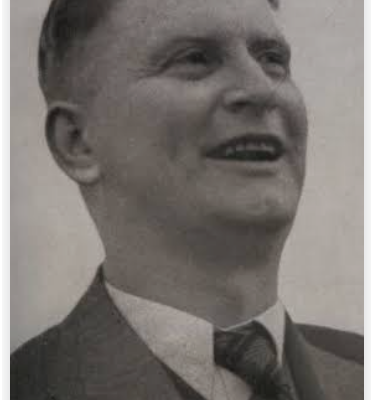
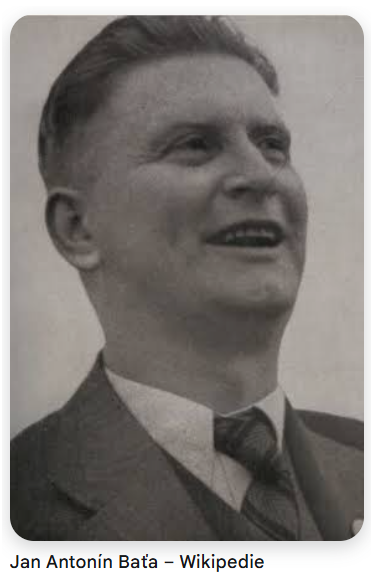
Jan Antonín Baťa was not merely a wealthy industrialist who contributed to Czechoslovakia’s defense. He was one of the principal civilian architects of the nation’s prewar preparedness—and, after the state itself was broken apart, the leader of an enterprise that continued the Czech and Slovak struggle across occupied Europe and around the world.
His contribution cannot be measured by searching for a single dramatic act. It must be measured as leadership is measured in a great organization: by the system he built, the men he selected and empowered, the resources he mobilized, the orders he gave, and the results produced under his authority. Those results reached from strategic reserves and pilot training before Munich to covert finance, escape assistance, resistance networks, the Slovak National Uprising, and industrial production for the Allied armies on a staggering scale.
The surviving record reveals something larger than corporate philanthropy. It reveals a private industrial system converted into an instrument of national survival.
Before Munich: Defense as a National System
Jan understood national defense more broadly than most political leaders. A country could not be defended by fortifications alone. It required trained people, aviation, transportation, communications, raw materials, productive capacity, financial strength, and an organization capable of acting quickly. In his speeches during the crisis year of 1938, he defended Czechoslovakia’s democratic identity, attacked weakness and indecision, and made the “no surrender” speeches noted contemporaneously by British diplomats.
He backed those words with resources. When the National Bank’s Dr. Karel Engliš feared that an emergency national Defense Action might raise no more than 300 million crowns, Jan mobilized Baťa employees throughout the organization and pledged to match their gifts crown for crown. The Baťa contribution on the opening day was approximately 30 million gold crowns. Within five days, the national campaign had exceeded 1.2 billion crowns. Jan did not simply write a check. He used the moral authority and organizational reach of Baťa to turn a hesitant appeal into a nationwide mobilization.
At the request of senior members of the Czechoslovak General Staff, including Generals Jan Syrový and Čízek, he also undertook to assemble roughly two years of essential wartime raw materials. Rubber, textiles, activated carbon, chemicals, adhesives, industrial inputs, and other strategic supplies were accumulated in Zlín and Slovakia. By May 1938, nearly half the intended reserve had reportedly been secured. This was a privately financed strategic base created for a national purpose—material that could sustain military production if imports were interrupted by war or blockade.
His aviation program reflected the same philosophy. When the Baťa organization was assigned a quota of only seven pilots under the national drive known as “1,000 Pilots for the Republic,” Zlín trained approximately 250. The aerodrome, workshops, flight school, aircraft development, and disciplined Baťa educational system created a reservoir of trained airmen. After occupation, many escaped and entered Royal Air Force service, including Czechoslovak squadrons that fought in the Battle of Britain and later campaigns. Jan’s own chief pilot, Jan Serhant, served with the Czechoslovak-manned 68th Night Fighter Squadron, while Jiří Doležal served with the 311th Bomber Squadron.
This was prewar leadership with wartime consequences: money mobilized, supplies accumulated, machinery prepared, pilots trained, and institutions made ready before the outcome was known.
When the State Fell, the System Remained
Munich and the German occupation destroyed Czechoslovakia’s territorial defense, but they did not destroy the worldwide system Jan had already created. Anticipating seizure, Baťa personnel dismantled and dispersed machinery to Britain, India, Singapore, Manila, and other locations. Specialized gas-mask machinery and trained personnel were transferred from the Fatra facility at Napajedla to France. Shipments of strategic materials were halted or diverted to Rotterdam, Marseille, Antwerp, Trieste, Norway, and England rather than allowed to reinforce German industry.
This was an industrial lifeboat strategy: disperse productive capacity, preserve Czech knowledge, deny valuable assets to the occupier, and maintain the ability to fight and rebuild from abroad. Germany could occupy Zlín, but it could not occupy the global structure Jan had placed beyond its reach.
Yet tens of thousands of employees and their families remained under German power. Open direction from Jan could expose them to arrest, forced labor, retaliation, or death. Leadership therefore had to become quieter, decentralized, and compartmentalized. Jan governed through men he had placed in positions of trust—Josef Hlavnička, Dominik Čipera, Hugo Vavrečka, František Malota, Frank Kraus, Frank Muška, and others. They were not merely former employees acting in isolation. They were the operating arms of a system whose authority still ran back to Jan.
The documentary record shows the chain. In September 1939, Jan instructed Vavrečka to work with George Kopecký to “arrange that people escape and are taken care of.” Hlavnička held formal authority to represent Jan and exercise voting rights attached to 175,400 Baťa shares. Kraus, acting under powers of attorney, later testified that he understood his duty to be preventing the Nazis from obtaining value from the enterprise.
František Malota’s account makes the command structure especially visible. When Čipera and Vavrečka developed measures to keep Baťa a.s. from falling under German control, the proposal moved through Hlavnička and Malota to Jan abroad. Malota traveled to Trieste, telephoned Jan at Belcamp, obtained his approval, and the authorization was confirmed back to Hlavnička. The chain was unmistakable: Čipera to Hlavnička, Hlavnička through Malota, Malota to Jan, and Jan’s authority back to Zlín. This was not abandonment of command. It was command adapted to occupation.
Muška: The Documentary Link to Jan
No figure demonstrates this system more clearly than Frank Muška, Jan’s trusted personal and financial representative. On April 5, 1939, Jan gave Muška power of attorney over his interests in Baťa companies throughout the world. Muška then became a crucial channel for financial assistance, relations with the Czechoslovak leadership abroad, military relief, and the mobilization of Baťa personnel.
On December 23, 1939, Muška wrote to Foreign Minister Jan Masaryk pledging that he would stand with him “at every opportunity.” His most revealing request was that his contribution be removed from the record. Secrecy was not the absence of support; it was part of the protective method. Public attribution could endanger employees, families, assets, and communication routes still exposed to Nazi control.
Jan’s letter to Muška of January 24, 1941 removes any serious doubt about the relationship between Muška’s visible activity and Jan’s leadership. Jan wrote that he had observed Muška’s activity in the Czech resistance “with satisfaction.” He praised Muška for bringing Baťa people into line for the cause and added: “they have certainly recognized that I am standing behind you.” He expressly approved Muška’s organization of financial assistance for the Czechoslovak cause, explaining: “I cannot act publicly like you.”
Those sentences are the key to the entire wartime structure. Muška acted openly where Jan could not. Jan supplied authority, approval, money, and organizational backing. Muška supplied the visible hand.
Muška later made the relationship explicit in his report to the Czechoslovak National Council. He asked the Council to regard the activity of the Batamen as the activity of Jan Antonín Baťa, because, as he stated, such extensive and effective work for the Czechoslovak and Allied cause would have been impossible without Jan’s knowledge and support. This was not a family interpretation produced decades later. It was the contemporary judgment of the man exercising Jan’s delegated authority.
Under that authority, Muška pursued practical aid. He proposed that Baťa factories in British India, Java, and Singapore supply footwear without charge to thousands of Czechoslovak soldiers in the Soviet Union, freeing scarce relief funds for warm clothing and other necessities. He addressed the evacuation of Czechoslovak soldiers and refugees stranded after the fall of France. He helped organize financial assistance on a scale later acknowledged by Czechoslovak Ambassador Vladimír Hurban, who eulogized Muška as a man who had placed his energy and financial support in the service of national liberation.
The artificial separation between “Muška’s resistance” and “Jan Baťa’s policy” cannot survive these documents. Jan himself said he stood behind Muška. Muška himself said the work could not have occurred without Jan.
Trojan, Baťovany, and the Price Paid in Slovakia
The system’s contribution was not confined to finance and covert administration. In Slovakia, the Baťa industrial community at Baťovany became deeply involved in the Slovak National Uprising. Employees and managers provided personnel, organization, facilities, supplies, and protection. Hundreds of Baťa-connected men entered the struggle. The record assembled in the addendum identifies 435 participants in the uprising and describes the severe losses associated with Captain Josef Trojan’s brigade, including approximately 160 Baťa men killed in the fighting.
Trojan’s importance lies within the larger leadership culture Jan had established. Jan’s enterprise had not been designed as an underground army. It had been designed to produce capable people—managers and workers trained to accept responsibility, improvise, organize others, and act without waiting for constant instruction. Under occupation, that same culture became a resistance asset. Men whom Jan’s system had selected, trained, and placed in authority possessed the discipline and local legitimacy necessary to turn an industrial community into a center of national action.
The broader tally in the document records 1,148 people connected with the Baťa enterprise who participated in national liberation: 39 executed or tortured to death, 65 imprisoned, 142 serving in the Czechoslovak Army abroad, 35 in partisan units, 16 at urban barricades, 435 in the Slovak National Uprising, 96 in organized underground resistance, and 320 in other combat activity.
These numbers must not be reduced to corporate statistics. They represent lives risked and lives lost. After the uprising was crushed, Baťa’s Slovak organization assumed responsibility for more than 250 widows and orphans of fallen partisans. Baťovany was later renamed Partizánske, and its factory became Závody 29. Augusta in commemoration of the uprising. The official names remembered the revolt, but largely erased the industrial system and leadership culture that had helped make it possible.
Trojan and the men who fought with him were not proof that Jan personally ordered every act in the mountains. The documents do not require such an overstatement. They prove something more historically meaningful: Jan had built the community, developed its human leadership, installed a delegated structure, and authorized a policy under which Baťa personnel and resources could serve the national cause.
An Enterprise Fighting on Every Front
Inside occupied territory, resistance often took the form of protected friction rather than spectacular sabotage: maintaining employment to reduce forced-labor deportations, hiding or misallocating materials, padding production times, slowing output, buffering German demands through administration, and channeling money, clothing, footwear, documents, and couriers to underground organizations. Armed action was only one part of a larger effort to keep people alive and deny the occupier complete use of Czech and Slovak capacity.
Outside occupied Europe, the Baťa system became a major Allied industrial asset. Batanagar, the industrial city Jan initiated and developed in India before the war, employed approximately 10,000 people by 1942. During the war it produced 30,021,753 pairs of boots, shoes, and related footwear; 23,788,439 pieces of military webbing; 542,709 pieces of parachute-dropping equipment; and 1,268,697 ground sheets, in addition to millions of other rubber and military components.
The footwear total included 433,129 pairs of RAF shoes, 52,015 pairs of mosquito boots for the RAF, 79,075 pairs of Royal Indian Navy shoes, 126,370 pairs of anti-gas overboots, and more than one million pairs of ankle boots. Batanagar was not simply a shoe factory that happened to receive military orders. It had become a diversified Allied supply complex.
Its Czechoslovak community also acted directly. The first volunteers who entered the Czechoslovak Army from India were Baťa employees from Batanagar. Other employees remained at essential war production, served in civil-defense organizations, donated blood, and raised money. Contemporary records list ₹183,649.99 for Czechoslovak Government War Funds, ₹201,181.88 for the Czechoslovak Red Cross, ₹96,672.06 for the Czechoslovak Army in the Soviet Union, and ₹15,029.54 for soldiers’ relief and related expenses. A November 1945 account placed total Batanagar contributions to Czechoslovak funds at ₹496,533.47 and combined Czechoslovak, British, Allied, and charitable contributions at approximately ₹756,864.23.
In North America, a report entered into the record of the United States Congress documented $280,000 contributed in 1940–1941 by the Baťa company and employees to the Czechoslovak cause. Jan later told the American ambassador that he had instructed French, British, and Indian plants to devote substantial portions of their profits to the Czechoslovak government and estimated that the organization’s total support exceeded two million wartime dollars, apart from contributions to general Allied causes. Those retrospective claims require critical evaluation, but the contemporary Muška correspondence, congressional accounting, and Batanagar records independently confirm the underlying pattern.
This was Jan’s distinctive form of wartime power. A government-in-exile could issue appeals; the Baťa system could answer with money, factories, footwear, transport, trained personnel, overseas accounts, and production on several continents.
Leadership Is Measured Through the Organization
It would be historically careless to attribute every brave act of every Baťa employee personally to Jan. The evidence does not show him issuing individual instructions for every transfer, every hidden shipment, every partisan mission, or every production order. But that is not how leadership of a vast enterprise works—and it is not the standard applied to political or military commanders.
A leader establishes purpose. He appoints people. He gives authority. He supplies resources. He sets policy. He approves action. He creates an institution capable of continuing when direct communication fails. On every one of those measures, Jan’s place in the wartime record is substantial.
He instructed that escapees be helped and cared for. He approved measures designed to keep the enterprise from German control. He formally empowered Hlavnička, Kraus, Muška, and others. Through Malota, his decision reached the occupied management. He told Muška that he stood behind the resistance activity and approved its financing. He created the aviation program that supplied trained men to the RAF. He had built Batanagar and the international factories that became Allied production centers. And he had created the management culture from which Trojan and hundreds of Czech and Slovak resisters emerged.
Jan later described his wartime policy to the British ambassador in direct terms: remove as much economic capacity as possible from German reach and turn it toward friendly British and American countries. The individual actions documented across the addendum—industrial dispersal, asset protection, rescue work, resistance finance, military relief, overseas manufacturing, and assistance to Czechoslovak forces—fit that strategic statement.
The result was not the work of a passive businessman protecting a fortune. It was a form of civil-industrial command: the use of enterprise, organization, finance, production, and human leadership to sustain a nation that had been removed from the map.
The Verdict of the Record
Jan Antonín Baťa should therefore be recognized in two inseparable capacities. First, he was a major civilian leader of Czechoslovakia’s prewar defense buildup. He mobilized national finance, built strategic reserves, developed aviation and pilot training, protected military production, strengthened national infrastructure, and publicly opposed surrender to Nazi pressure.
Second, he led an enterprise that made an enormous and continuing contribution to the Czech and Slovak cause after occupation. The proof lies not in slogans but in the men, documents, and measurable results: Muška’s explicit declaration that the work of the Batamen was Jan’s work; Malota’s evidence of the command chain; Hlavnička’s delegated authority in Zlín; Vavrečka’s instruction to help people escape; Kraus’s mission to deny value to the Nazis; Trojan’s brigade and the sacrifice at Baťovany; hundreds of resistance participants; Baťa-trained RAF airmen; millions in financial support; and tens of millions of military articles produced by Batanagar.
The most revealing sentence remains Jan’s own: “they have certainly recognized that I am standing behind you.”
He was standing behind Muška. He was standing behind the delegated managers. He was standing behind an international industrial network fighting with money, machines, intelligence, organization, and human courage. He was standing behind a nation whose territory had been occupied but whose people and productive power had not surrendered.
Jan Antonín Baťa’s wartime legacy is therefore not a footnote to the history of Czechoslovak resistance. It is the history of how a modern industrial system—prepared before the crisis, dispersed before seizure, and directed through trusted men—became one of the great private instruments of the Czech and Slovak struggle for survival and liberation.
Source and Method Note
This article is based on John G. Nash, Addendum III — Jan Baťa’s Wartime Record (August 2026), including the integrated manuscripts “The Baťa System at War,” “Jan Antonín Baťa and the Resistance by Proxy,” “Frank Muška as Jan Antonín Baťa’s Wartime Proxy,” and the Batanagar wartime production study.
Principal documentary items identified in the addendum include Jan Antonín Baťa’s letters to Frank Muška (January 24, 1941), Hugo Vavrečka (September 10, 1939), British Ambassador Donald St. Clair Gainer (1945), and U.S. Ambassador William Douglas Pawley (1946); Muška’s correspondence with Jan Masaryk and report to the Czechoslovak National Council; the Malota and Kraus evidence; powers of attorney and shareholder authorizations; the congressional accounting of Baťa contributions; and contemporary Batanagar production and contribution records.
Historical caution: the article attributes to Jan the system, delegated authority, policies, approvals, and specific instructions supported by the record. It does not claim that he personally ordered every independent resistance act undertaken by every Baťa employee. ***
P.S.
If the world is to survive, it needs new Batas. The legacy of the founders and creators of the Baťa company remains as relevant as ever. In the first film from the 1950s, *BOTOSTROJ*, Baťa was crudely slandered. In the second, more recent film, *ÚSVIT*, the same thing happened again. A third film is due to be made next year, to mark the 150th anniversary of Tomáš Baťa’s tragic death. Let us hope that it will finally be truthful and honest – about the honest work carried out by the world’s first global company, Baťa.
Jan A. Baťa’s family villa in Zlín was unlawfully confiscated by the Communists. This year, a court ruled that it cannot be returned because there is no law to allow it?! Czech Radio still has its headquarters there…
In Josef Banáš’s book, *I AM BAŤA, I CAN DO IT!*, it is written how Tomáš Baťa had a premonition of his own death. Just before the plane crashed in Otrokovice, a massive bolt of lightning struck the Forest Cemetery in Zlín, splitting a 300-year-old oak tree near the spot where Tomáš Baťa was later buried alongside his pilot, Jindřich Brouček. They were among the first to be buried at the Forest Cemetery, which Tomáš Baťa had founded…
The Prime Minister of the Czech Republic, Andrej Babiš, entered politics with the aim of putting the philosophy of the Baťa company into practice…
Každý Váš příspěvek nejen pomáhá financovat naši práci, ale také podporuje šíření těchto informací, aby se dostaly k co nejvíce lidem. Společně tak můžeme zajistit odpovědnost a spravedlnost, aby pravda nezůstala skrytá. Děkujeme za Vaši podporu!